
Avoiding emotional investing
As your investments gain or lose value, it’s normal to feel emotions ranging from excitement to fear. When these emotions guide your investing decisions, it can lead you to make choices that don’t line up with your goals – and can even keep you from reaching them. Here’s how:
- Anxiety over falling prices can cause you to sell or trade an investment too soon
- Confidence that prices will continue rising can cause you to keep an investment too long or try to time the market
- Timing the market can be costly since the market’s worst days are often followed by its best ones; withdrawing money in a downturn and missing a few top-performing days can greatly affect your returns (see “The market’s best days” chart)
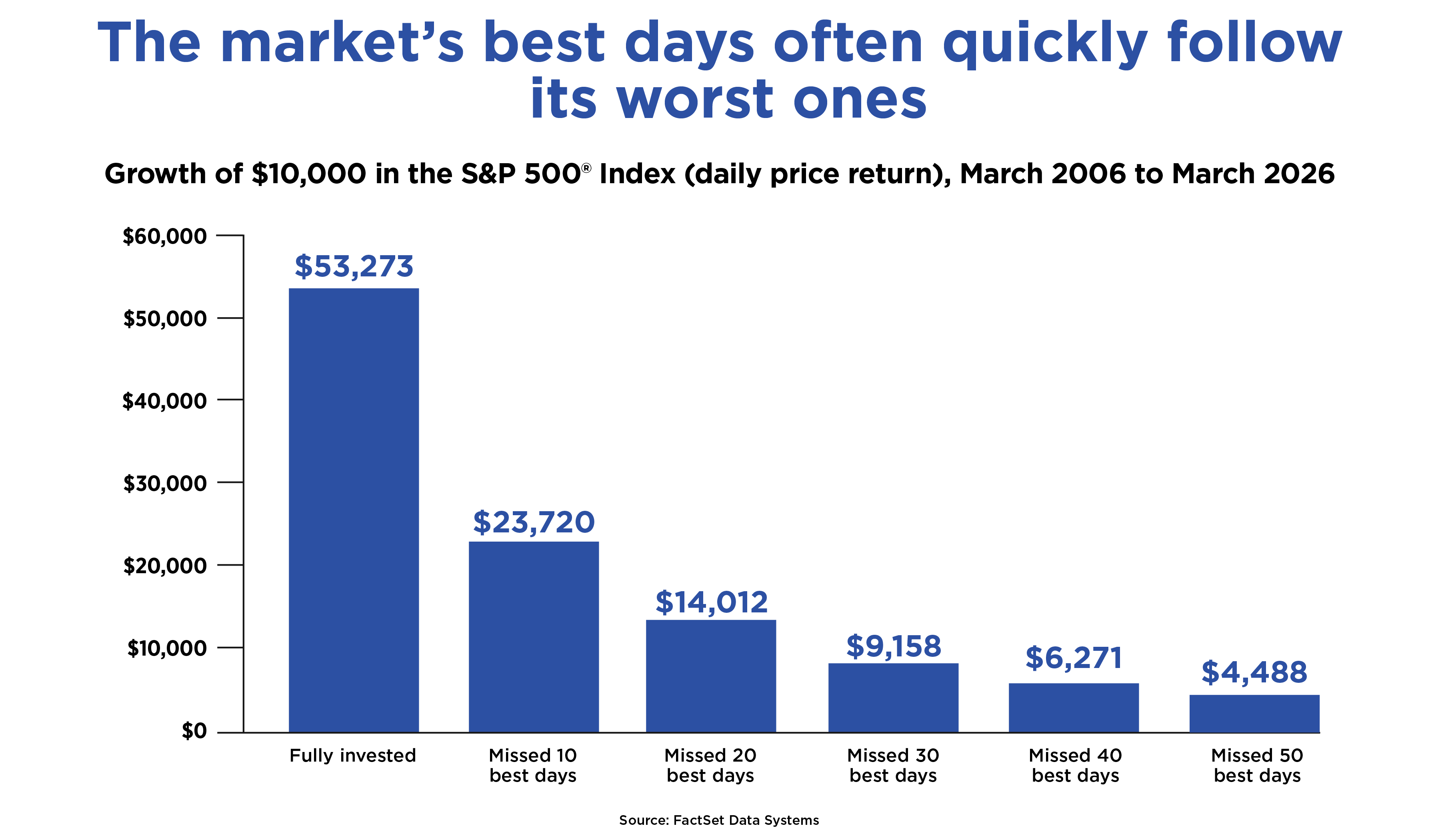
The S&P 500 Index is unmanaged and cannot be invested in directly. Index performance does not represent fees or expenses.
Past performance is not indicative of future results. For illustrative purposes only.
Instead, consider using strategies like these to stay on track:
- Make a long-term plan. It will help you stay calm and stay the course when the market is changing. Use My Income & Retirement Planner® inside your account to set goals and get started. You can also meet with us for help.
- Set up regular contributions. This helps reduce the impact of market swings because you’ll buy more investments when prices are lower and fewer when prices are higher. Increasing contributions throughout your career can also help steadily build your portfolio.
- Have a diverse investment mix. Spreading your investments among a wide range of options helps protect your savings during volatile markets. Review your account online to check your asset allocation and investment selections.
Ready to put these strategies into action?
Log in today to use planning tools, increase your contributions or review your account